
Insights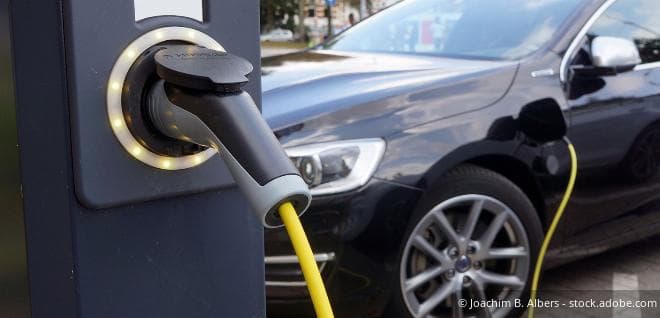
HR & PAYROLL
Increased taxation of non-cash benefits for e-company cars planned
From 1 January 2027 the tax advantage for company cars in the form of electric cars is to be restricted.
In the future, according to the planned measures of the Ministry of Finance, a non-cash benefit (Sachbezug) is also to be assessed for such electric company cars that can be used privately by the employee. By applying a reduced non‑cash benefit value compared with the regular non‑cash benefit, the ecological incentives are to be retained, which is why a moderately priced entry is planned for the first year 2027.
To date, electric company cars with the possibility of private use have been particularly tax‑advantageous, because for these vehicles with a CO₂ emission of zero grams per kilometre a non‑cash benefit value of zero is to be applied. Consequently, employees incur neither income tax nor social security contributions for the private use of the vehicle.
Taxable non‑cash benefit
Within the framework of the 2027‑2028 budget, the federal government now plans an adjustment. In the future, a taxable non‑cash benefit is also to apply to electric company cars, to be introduced on a graduated basis as follows:
Conclusion
Electric company cars are to lose part of their previous tax advantages from 2027, but remain favoured compared with company cars with an internal‑combustion engine. The planned non‑cash benefit is significantly lower than that for combustion‑engine vehicles, which – depending on CO₂ emissions – currently amounts to 1.5 % or 2 % of the actual acquisition cost including VAT and NoVA, and is capped at a maximum of EUR 720 or EUR 960 per month respectively.
The regulation relevant to the above provisions, the Ordinance on the Valuation of Certain Non‑Cash Benefits (Sachbezugswerteverordnung), has not yet been amended in line with these planned changes, so it remains to be seen what the exact wording of the ordinance will be.
To date, electric company cars with the possibility of private use have been particularly tax‑advantageous, because for these vehicles with a CO₂ emission of zero grams per kilometre a non‑cash benefit value of zero is to be applied. Consequently, employees incur neither income tax nor social security contributions for the private use of the vehicle.
Taxable non‑cash benefit
Within the framework of the 2027‑2028 budget, the federal government now plans an adjustment. In the future, a taxable non‑cash benefit is also to apply to electric company cars, to be introduced on a graduated basis as follows:
- In the calendar year 2027 a non‑cash benefit value of 0.375 % of the acquisition cost of the motor vehicle (including VAT and standard consumption tax), maximum EUR 180 per month, is to be applied.
- From the calendar year 2028 the non‑cash benefit value is 0.625 % of the acquisition cost of the motor vehicle (including VAT and standard consumption tax), maximum EUR 300 per month.
Conclusion
Electric company cars are to lose part of their previous tax advantages from 2027, but remain favoured compared with company cars with an internal‑combustion engine. The planned non‑cash benefit is significantly lower than that for combustion‑engine vehicles, which – depending on CO₂ emissions – currently amounts to 1.5 % or 2 % of the actual acquisition cost including VAT and NoVA, and is capped at a maximum of EUR 720 or EUR 960 per month respectively.
The regulation relevant to the above provisions, the Ordinance on the Valuation of Certain Non‑Cash Benefits (Sachbezugswerteverordnung), has not yet been amended in line with these planned changes, so it remains to be seen what the exact wording of the ordinance will be.